


What Is Owner's Representation in Real Estate Development? A Complete Guide

Updated: Jul 27
If you own land, capital, or both, and you're moving toward a development project, you'll eventually run into a title that isn't always well understood outside the industry: the owner's representative. Landowners, investors, and even experienced builders sometimes confuse the role with a general contractor, a project manager, or a consultant. It's really none of those — and understanding the difference can save a project hundreds of thousands of dollars and months of avoidable delay.
The Short Answer
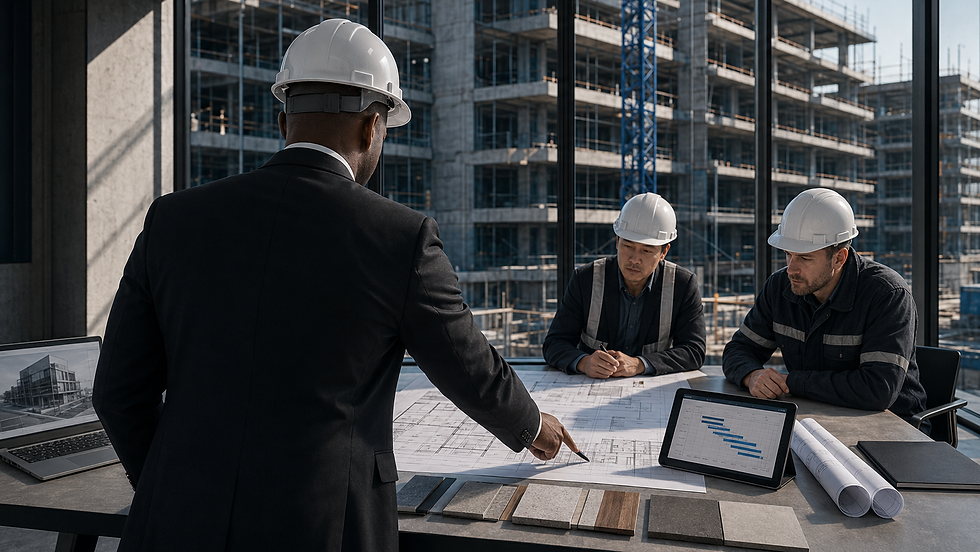
An owner's representative (often shortened to "owner's rep") is hired by the landowner or capital source — not the builder, not the municipality, not the engineer — to act as their advocate and quarterback across the entire lifecycle of a development project. Everyone else on a project team has a role that, at some point, can conflict with the owner's interests. The general contractor wants efficient construction. The engineer wants a defensible design. The municipality wants compliance. The owner's rep is the only party at the table whose job is to protect the owner's outcome, full stop.
What an Owner's Rep Actually Does
The scope varies by project, but a strong owner's rep typically covers:
Pre-development strategy. Before a shovel touches dirt, an owner's rep helps assess feasibility — zoning constraints, utility availability, environmental issues, market absorption — and builds the roadmap for entitlements, budget, and schedule.
Entitlement and permitting oversight.
Rezoning, plat approvals, development agreements, and permits are where projects most often stall. An owner's rep manages this process end-to-end, working directly with planning departments, engineers, and legal counsel so the owner isn't learning municipal procedure in real time.
Budget and schedule accountability.
This is the core of the job. The owner's rep builds and defends the pro forma, tracks spend against budget, flags variance early, and phases the project so capital isn't tied up in infrastructure the market isn't ready to absorb.
Contractor and design team coordination.
The owner's rep doesn't replace the general contractor or the engineer — they sit above them, coordinating scope, resolving conflicts, and making sure design decisions serve the owner's financial goals rather than just the design team's preferences.
Risk and compliance management.
Bonds, letters of credit, insurance requirements, and regulatory compliance all carry real financial exposure if mismanaged. Part of the job is simply making sure nothing falls through the cracks.
Investor and lender reporting.
For projects with outside capital, the owner's rep is often the person translating field-level progress into the kind of reporting investors and lenders actually need to stay confident in the deal.
Why Owners Bring in a Rep
Most landowners and even many developers are not full-time development professionals. A physician who inherited a parcel, a family office diversifying into land, or a builder expanding into a market they don't know well — none of these owners want to become experts in municipal entitlement procedure or construction risk management. They want the outcome: an entitled, developed, sellable asset, delivered on budget.
There's also a simple math argument. A skilled owner's rep typically pays for their own fee many times over — through cost savings identified during feasibility, entitlement delays avoided, and change orders caught before they're approved rather than after. On a project where we recently restructured the phasing plan to better match infrastructure spend with sales velocity, the savings from that single adjustment alone covered a meaningful share of the project's oversight costs for the year.
When to Bring One On
The most common mistake owners make is waiting too long. An owner's rep is most valuable during feasibility and entitlement — the phase where the biggest, most expensive decisions get made and where mistakes are hardest to unwind later. By the time a project is under construction, many of the decisions that determine profitability have already been locked in.
If you're evaluating a parcel, negotiating a joint venture, or sitting on land you're not sure how to move forward on, that's the right moment to bring in representation — not after the first missed deadline.
The Bottom Line
Owner's representation exists because development is genuinely complex, and because every other party on a project team has priorities that only sometimes align with the owner's. A good owner's rep closes that gap. If you're weighing whether your project needs one, our next post walks through seven specific warning signs that your project may already be at risk without one.
HK Ascensions provides owner's representation for land development and residential construction projects, guiding landowners from raw land through entitlements, construction, and turnover. If you're evaluating a project and want a second set of eyes, reach out to our team.


Comments